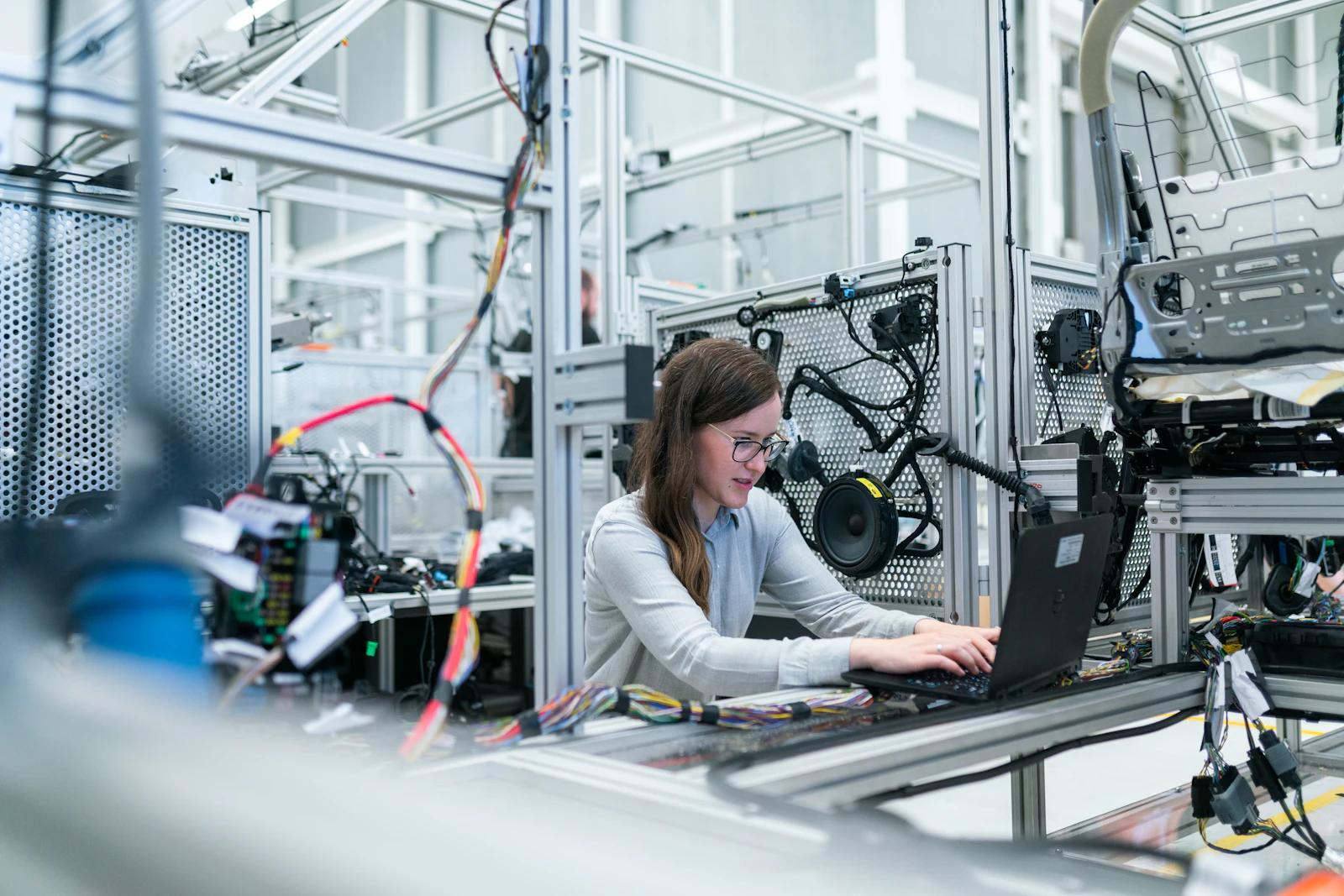
Manufacturing in East Africa is having a software moment. Factories that once tracked batches on whiteboards now face customer audits requiring full traceability, export partners demanding ISO documentation, and margins too thin to absorb unplanned downtime.
AI and automation — used practically — address these pressures without requiring a PhD in data science.
Beyond the chatbot hype
Manufacturing AI is not about asking ChatGPT to write safety policies. It is about:
- Batch traceability from raw material lot to finished SKU
- Production scheduling that respects machine capacity and material availability
- Predictive maintenance alerts from sensor or manual inspection data
- Quality hold/release workflows with documented approvals
- Demand forecasting from historical orders and seasonality
iProduction delivers these as operational modules connected to inventory and costing — not disconnected dashboards.
Pain points on the Kenyan factory floor
Material shortages mid-run
Production starts before procurement confirms raw material arrival — line stops, labour idle, deadlines missed.
Recall unpreparedness
When a quality issue surfaces, tracing affected batches across customers takes days if travellers are paper-based.
Costing blindness
Finance learns true unit cost at month-end — too late to adjust pricing or negotiate supplier terms.
Manual scheduling
Planners use Excel Gantt charts that break when one machine goes down or one rush order arrives.
Automation building blocks
| Module | Outcome |
|---|---|
| BOM management | Accurate material requirements per SKU |
| Work orders | Shop-floor visibility of status and assignees |
| Batch/lot tracking | One-scan traceability for audits |
| MRP suggestions | Purchase orders triggered by production plan |
| Quality checks | Hold non-conforming batches automatically |
| ERP sync | Finished goods and WIP in Leesify ERP |
AI where it actually helps
Anomaly detection on output
Compare expected vs actual yield per batch — flag deviations before they become recalls.
Schedule optimization
Algorithms suggest sequence changes when rush orders arrive — planner approves, system updates.
Natural-language reporting
Plant managers ask "which batches used supplier X lot Y?" and get exportable answers — no SQL required.
These are decision support tools, not autonomous robots — appropriate for mid-size factories scaling digitization.
Integration with retail and distribution
Many Kenyan manufacturers also sell direct or through owned retail. Connecting iProduction to Leesify ERP means:
- Production plan adjusts when retail sell-through spikes
- Promotions do not stock-out because factory did not know
- Costing reflects real material prices, not last month's guess
Implementation without stopping the line
- Pilot one production line — digitize BOM and travellers
- Barcode or QR on batches — minimal hardware cost
- Train supervisors on tablet dashboards — not HQ-only views
- Expand to additional lines after 90-day review
- Connect ERP for finance and inventory sync
Altify deployments typically pilot in 8–12 weeks.
Metrics to prove ROI
- OEE (Overall Equipment Effectiveness) trend
- Schedule adherence — orders delivered on promised date
- Scrap/rework rate by line
- Recall trace time — hours to identify affected lots
- Inventory days of raw material
Even 2% yield improvement on high-volume lines justifies digitization spend.
Next steps
Book iProduction demo or explore manufacturing solutions.
The Altify team responds within 24 hours (EAT).